








Laser Tattoo and P-Makeup Lightening
Course in Pärnu: Theory and Practice
Laser lightening of tattoos and permanent makeup in Pärnu is an advanced aesthetic procedure designed to gradually reduce pigment intensity in the skin while preserving surrounding tissue.
This method is commonly used for cover-up preparation, shape correction, or adjusting the overall tone of existing work.
The technique is based on selective photothermolysis, where laser energy targets pigment particles and breaks them down into smaller fragments. These fragments are then naturally eliminated by the body over time. To work effectively and safely, a specialist must understand both the physical principles of laser technology and the biological response of the skin.

 Create a sketch in the VEAN TATTOO AI generator


Theoretical Module
At the beginning of the course, participants explore the key physical and biological processes behind laser pigment lightening.
This foundation helps to better understand how laser pulses interact with pigment and how the skin responds during recovery.
The program includes:
- the principle of selective photothermolysis
- the photoacoustic effect and pigment fragmentation mechanisms
- the use of 1064 nm and 532 nm wavelengths for different pigment tones
- differences between nanosecond and picosecond pulses
- skin structure, including sensitive areas such as eyebrows and lips
- pigment phagocytosis and its behavior in tissue
- how different pigments react to laser exposure
- skin phototypes and parameter selection
- indications, contraindications, and potential side effects
This knowledge allows specialists to predict results more accurately and choose the right approach when working with pigments of varying depth and density.
A separate theoretical section focuses on permanent makeup lightening, including possible color shifts and working with dense mineral pigments.


Practical Module
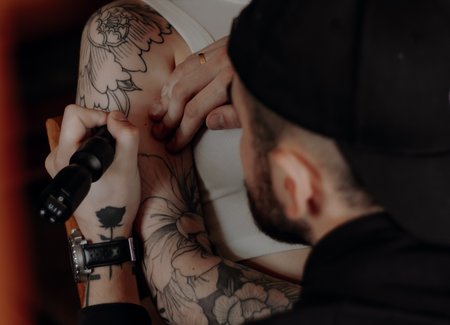
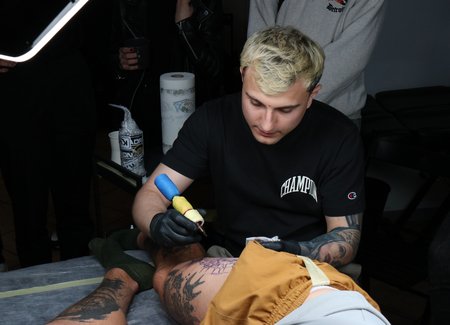
The practical part of the training takes place on live models under instructor supervision.
This allows participants to apply theoretical knowledge in real conditions and develop confidence in using laser equipment.
During the practice, participants:
- conduct initial consultations and assess the treatment area
- determine pigment depth and density
- select laser parameters (energy, frequency, spot size)
- practice consistent and even application techniques
- monitor tissue response during the procedure
- build safe and effective treatment protocols
Hands-on experience helps specialists adjust parameters according to individual skin characteristics and achieve more predictable results.
Special attention is given to delicate areas such as eyelids, eyebrows, and lips, where preserving a natural appearance is essential.
Practice on Live Models
Independent work on models under the guidance of a mentor is a key stage of the course. It helps participants gain confidence and refine their technique.
This stage allows them to:
- develop precise and controlled working methods
- predict the level of pigment lightening
- manage the intensity of laser exposure
- plan safe intervals between sessions
Working with real models provides a deeper understanding of both pigment reduction dynamics and the skin healing process.


Learning Outcomes
After completing the course in Pärnu, participants gain both theoretical knowledge and practical skills required for professional laser lightening procedures.
This enables them to work safely and effectively with tattoos and permanent makeup.
Graduates will be able to:
- understand the physical and biological mechanisms of laser treatment
- select appropriate parameters for different skin types
- work with pigments of varying density
- minimize the risk of complications
- guide clients professionally throughout the healing process
The course is suitable for cosmetologists, laser specialists, tattoo artists, and permanent makeup professionals who want to expand their expertise.
Conclusion
Laser pigment lightening requires not only technical skill but also a deep understanding of skin processes. Professional training in Pärnu helps specialists develop a safe and structured approach, achieve consistent results, and confidently apply modern technologies in their practice.


