









Laser Tattoo and Permanent Makeup
Lightening Course in Tallinn:
Theory and Practice
Laser lightening of tattoos and permanent makeup in Tallinn is an advanced approach aimed at gradually reducing pigment intensity in the skin while preserving surrounding tissues.
This method is widely used for preparing tattoos for cover-ups, refining shapes, or adjusting color saturation. It is a reliable solution for those who want to modify existing work without compromising skin quality.
How the Technology Works
At the core of the method is selective photothermolysis. Laser energy targets pigment particles, breaking them into smaller fragments that are naturally removed by the body over time. Achieving safe and effective results requires not only technical precision but also a clear understanding of how the skin responds to laser exposure.

 Create a sketch in the VEAN TATTOO AI generator

Theoretical Training
The course begins with a comprehensive theoretical foundation, allowing participants to understand the key physical and biological mechanisms involved in laser lightening.
This knowledge helps specialists approach each case more consciously and build a personalized treatment strategy.
The theoretical program covers the essential topics needed for confident practice:
- principles of selective photothermolysis
- photoacoustic effect and pigment fragmentation
- use of 1064 nm and 532 nm wavelengths for different colors
- differences between nanosecond and picosecond pulses
- skin structure, including brows, lips, and eyelid areas
- phagocytosis and pigment behavior in tissues
- response of various pigments to laser treatment
- skin phototypes and parameter selection
- indications and contraindications
- possible side effects and prevention methods
This part of the course provides a strong knowledge base for working with pigments of different depths and densities.


Practical Training
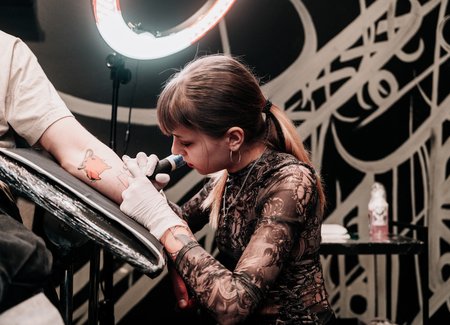
Hands-on training is carried out on live models under the supervision of experienced instructors.
This stage allows participants to translate theory into real-world practice and develop confidence in using laser equipment.
During practical sessions, participants go through all key stages of the procedure:
- conducting consultations and assessing treatment areas
- determining pigment depth and characteristics
- selecting appropriate laser settings (energy, frequency, spot size)
- practicing even and controlled application
- monitoring skin response during the procedure
- developing safe treatment protocols
Special attention is given to delicate areas such as eyelids, eyebrows, and lips, where precision and a careful approach are especially important.
Model-Based Practice
Independent work with models under mentor supervision is a crucial part of the training process. It helps participants refine their technique and gain practical confidence.
At this stage, participants focus on developing essential professional skills:
- controlling treatment intensity accurately
- predicting the degree of lightening
- planning appropriate intervals between sessions
This experience allows for a deeper understanding of both the lightening process and the skin’s recovery over time.


Learning Outcomes
Upon completing the course in Tallinn, participants gain both theoretical knowledge and practical skills necessary for performing laser lightening procedures safely and effectively.
This enables them to work with greater precision and confidence.
After training, specialists will:
- understand the physical and biological processes involved
- select appropriate parameters for different skin phototypes
- work with pigments of varying depth and density
- minimize the risk of complications
- guide clients through all stages of recovery
This course is suitable for cosmetologists, laser specialists, tattoo artists, and permanent makeup professionals who want to expand their expertise and services.
Final Note
Laser lightening of tattoos and permanent makeup requires more than just technical ability—it demands a deep understanding of skin processes and careful control at every stage. Professional training in Tallinn provides the tools and knowledge needed to achieve consistent, predictable results and deliver high-quality services.


